On this page
- Why the payload question is being asked now
- The three payload classes, and what each one is actually for
- Payload does not scale productivity linearly — endurance is the price
- What a same-class job actually looks like
- Ground support is the real capacity ceiling
- How payload class enters the cost per hectare
- The decision table: matching class to farm
- Companies to consider
- Why we build the full-size class in Xuzhou
- How to get a quote
- Frequently asked questions
- Conclusion
The payload class that fits your farm is decided by two numbers that have nothing to do with the aircraft: the size of your largest single block, and how fast you can refill. A 70-litre machine covering roughly 3 hectares per sortie and a 20-litre machine covering under a hectare per sortie are not a better and a worse aircraft — they are answers to different logistics problems. Buy the larger class for block size you cannot refill against and you have bought ferry flights and wasted battery cycles. Buy the smaller class for large contiguous fields and the constraint moves from the aircraft to the calendar.
This guide sets out where the payload-class boundaries actually fall, what each class costs in productivity terms, and the four questions that resolve the decision for a specific farm.
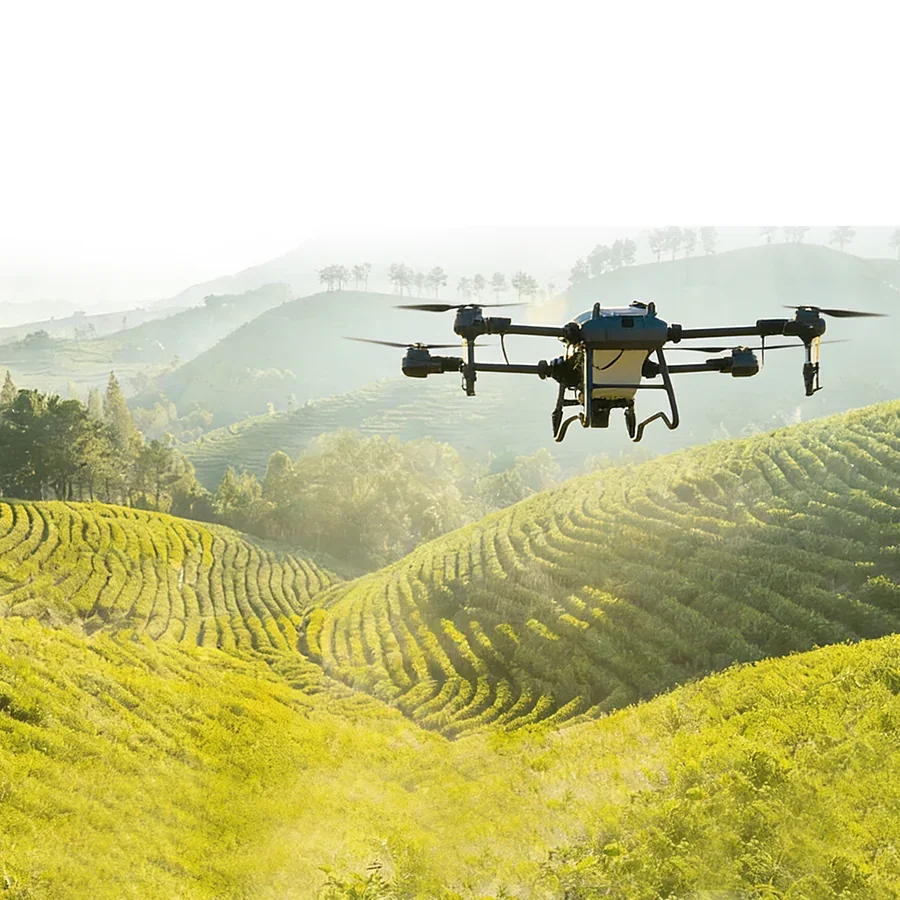
JTILEP (Xuzhou Jitian Intelligent Equipment Co., Ltd.) is a Xuzhou, China-based manufacturer of agricultural spray drones and BDS-based tractor auto-steering systems, exporting B2B with OEM/ODM terms and a minimum order quantity of one unit. Our JT-80 sits in the full-size class — 70 L spray tank, 100 L spreading hopper, 80 kg maximum payload. Everything below about the larger class is drawn from our own published specification; everything about other classes and about real-world productivity is sourced to a named operator, manufacturer or study.
Why the payload question is being asked now
The market has split into distinct classes, and buyers are no longer choosing between "a drone" and "no drone".
The fleet is large enough to have tiers. The global DJI agricultural fleet passed 600,000 aircraft by early 2026 (source: DroneXL, April 2026), and Brazil alone had 13,224 registered agricultural drones as of August 2026, with Chinese brands accounting for over 90% of the fleet (source: Brazilian civil aviation authority figures, reported by Brasil de Fato, August 2026). When a market reaches that size, manufacturers stop building one general-purpose machine and start building a range.
Contract rates fell, which moves the break-even. Drone application was priced at USD 22–25 per acre in 2022; by 2026 the market sits at USD 12–17 per acre with a national US average near USD 13 (source: dronelist.io, 2026). Lower contract rates raise the acreage at which owning beats hiring, and the number of aircraft you need to justify changes with it.
And the class you buy determines your regulatory weight tier. Loaded takeoff weight places an aircraft in a regulatory class in almost every market — 55 pounds in the United States, 25 kg in Australia's medium category and in Argentina's permissive rural provision, 150 kg in the EU heavy-UAS discussion. That link is set out in our regional regulations checklist; this guide stays on the operational question.
The three payload classes, and what each one is actually for
Commercial agricultural spraying has settled into three working tiers. The boundaries are approximate and manufacturers place models differently, but the operational logic is consistent.
| Class | Tank size | Typical sortie coverage | Field shapes it suits | Ground support burden |
|---|---|---|---|---|
| Compact | Roughly 10–20 L | Under 1 ha | Orchards, vineyards, terraces, fragmented holdings, nurseries | Low — one person, spare batteries, a small water supply |
| Mid-size | Roughly 40–60 L | 1.5–2.5 ha | Mixed farming, medium blocks, contractor work across varied farms | Moderate — vehicle-mounted refill, several battery packs |
| Full-size | Roughly 60–80 L | ≈3 ha per sortie at the JT-80's published specification | Large contiguous blocks, broadacre, full-time contracting | High — generator, multiple packs, bulk water, dedicated tender |
Compact class. The defining advantage is not cost per hectare — it is access and mobility. A compact aircraft reaches sloped orchards, terraces and small fragmented blocks where a full-size machine cannot practically operate, and it can be moved between distant small plots without a trailer. Its limitation is sortie count: at a fraction of the tank volume, a large field becomes a long sequence of refills.
Mid-size class. The general-purpose tier. It carries enough to make a meaningful sortie on a medium block, and it stays light enough to handle varied terrain and to be transported between farms by one vehicle. Buyers who genuinely cannot predict their largest single block should be looking here rather than at either extreme.
Full-size class. Built for volume. Coverage per sortie is the reason it exists — fewer landings, fewer refills, fewer battery cycles per hectare treated. It is also the class that imposes real ground-support requirements, and the class where forgetting those requirements produces the worst outcome: an expensive aircraft flying short sorties with long waits.
Payload does not scale productivity linearly — endurance is the price
This is the most misread number in spray drone specifications, so it is worth stating precisely.
The JT-80's published specification is 6.5 minutes of flight per sortie at full payload, against 16.5 minutes empty, both measured as single battery cycles and both stated per sortie, not per day. Carrying the load reduces sortie endurance to roughly 39% of the empty figure (source: JTILEP JT-80 published specification, 2026).
That figure is a battery cycle, not a duty cycle. A working day is a sequence of those cycles separated by landings, battery swaps, refills and repositioning — and it is the sequence, not any single flight, that determines hectares per day.
Two arithmetic consequences follow directly from the published numbers. Both are our own calculations from those figures and should be read as such:
- Spray time is not the limiting factor. A 70 L tank emptied through a 40 L/min maximum flow rate is under two minutes of continuous spraying. The remaining minutes of a full-payload sortie go to takeoff, transit, turns, terrain following and landing. Sortie length is governed by turning and transit, not by how fast the pump runs.
- Swath width is the productivity lever. At the published 12 m effective swath and 5 m/s working speed, the theoretical treated rate is on the order of 0.36 ha per minute — about 21.6 ha per hour of uninterrupted spraying at maximum swath. Real figures land far below this, and the gap is almost entirely ground support (see below).
The practical reading: when you move up a payload class, you are buying fewer sortie cycles for the same area — not a proportional increase in hectares per hour. If your refill loop cannot keep pace with the shorter cycles a full-size aircraft produces, the extra tank capacity converts into waiting, not into coverage.
What a same-class job actually looks like
The most useful public benchmark for this class is a logged commercial job rather than a brochure figure. A 70 L-class machine working North Queensland in February 2026, in summer heat with rain threatening, flew 32 sorties between 07:05 and 11:49 — 4 hours 45 minutes — covering roughly 21 hectares per hour at a 20 L/ha application rate. That is 2,207 litres applied, about 465 litres per hour through the machine, at 68 litres and 3.125 hectares per sortie, 46 km/h and a 12 m swath.
The part worth reading twice is the ground support: three 45 Ah battery packs, a 13,000 W charger, a 24 kVA generator and a 1,000 L intermediate bulk container of water. And roughly 30 minutes of that morning — about one sortie in ten — was spent waiting on water, not flying (source: EAvision Australia logged J150 job, February 2026).
Note how closely that machine's specification matches the JT-80's published numbers: 70 L tank, 40 L/min flow, 12 m swath. Two aircraft in the same class produce the same operational profile, and the profile's ceiling was set by water logistics rather than by the aircraft. The operator's own conclusion is the one to carry forward: your ground setup determines hectares per hour at least as much as the drone does.
Ground support is the real capacity ceiling
Because the full-size class works in short cycles, the supporting equipment is not an accessory — it is half the system. Our own working set for the JT-80 is published as the aircraft, the RTK base station on its tripod, a generator, spare battery packs, a controller and a water tender, and that list is not padding: remove any of it and coverage per day falls.
Three constraints set the ceiling, in this order of frequency:
Water and chemical supply. The North Queensland job lost about 10% of its flying window to waiting on water with a 1,000 L supply on site. Bulk water capacity and pumping rate — not tank size — set the achievable cycle time.
Battery inventory and charging power. Packs are consumables with a finite cycle life, and the JT-80's published battery rating is 1,500 charge/discharge cycles. Pack cost varies widely by class — published figures put spray-drone battery packs at roughly USD 500–1,500 each, with large-aircraft packs around USD 2,500 and an expected life of about five years (source: aerovisiondrones.com, 2026; University of Missouri Extension G1274, 2026). The number of packs, not the number of aircraft, is usually the throughput limit — a machine with three packs flies a cadence set by charging, not by demand.
Travel between blocks. A full-size aircraft needs a trailer or a suitable vehicle, and moving between dispersed plots costs real time. Fragmented holdings can favour two compact aircraft over one large one for exactly this reason.
How payload class enters the cost per hectare
Payload class does not change the arithmetic of ownership; it changes the volume at which the arithmetic works.
Published US modelling puts a farm-owned spray operation at USD 12.27 per acre at 1,000 acres a year, falling to USD 7.39 per acre at 4,000 acres for a custom operator spreading the same fixed costs over four times the area — a 40% swing from volume alone (source: University of Missouri Extension G1274, 2026). The break-even against hiring a contractor lands near 980 sprayed acres per year (source: University of Missouri Extension G1274, 2026).
Aircraft acquisition sits at USD 15,000–40,000 for the aircraft alone and USD 45,000–70,000 for a turnkey operation (source: dronelist.io, 2026). Where two aircraft are paired deliberately rather than as an upgrade, a dual-aircraft platform with integrated generator, water tank and communications has been quoted at around USD 110,000, with the business case resting on labour: two people running two aircraft instead of four people running one (source: Xmobots, 2026).
On contractor-side application cost in Brazil, a single aircraft operation runs at BRL 38.50 per hectare at 28 ha/h, against BRL 31.50 for a self-propelled ground sprayer at 55 ha/h. Pairing two drones takes it to about BRL 20 per hectare at 70–75 ha/h (source: Xmobots, 2026). Read that carefully: a single drone in the full-size class is more expensive per hectare than a ground sprayer — pairing is what changes the ranking. The full breakdown of those definitions, and why application cost and ownership cost must never be merged into one table, is in our cost-per-hectare comparison.
The decision table: matching class to farm
| Your situation | Sensible class | Why |
|---|---|---|
| Sloped orchards, terraces, vineyards, fragmented small plots | Compact | Access and mobility dominate; a large tank cannot be used where the aircraft cannot safely fly |
| One large contiguous block, bulk water and generator on site | Full-size | Fewest cycles per hectare; ground support is the constraint you have already solved |
| Mixed farm, blocks of varying size, some contracting | Mid-size | Balances sortie coverage against transport and terrain flexibility |
| Full-time contractor serving many farms | Full-size, possibly paired | Transport between sites is a given; coverage per sortie and labour per hectare decide margin |
| Genuinely unsure of your largest block | Mid-size | The class you can grow into without stranding capability |
| Under about 400 hectares a year | Compact or hire | Published break-even sits near 980 sprayed acres; below it, hiring carries no capital risk |
Companies to consider
Beyond our own range, these are the platform suppliers most often compared at each payload class:
- JTILEP (Xuzhou Jitian Intelligent Equipment Co., Ltd.) — full-size class: the JT-80 spray drone, 70 L spray tank and 100 L spreading hopper interchangeable on one airframe, 80 kg maximum payload, IP67 construction, radar obstacle detection to 50 m. Sits within a wider air-ground system alongside the HD818 tractor auto-steering system.
- DJI Agriculture (Agras series) — the largest installed base globally, spanning compact to heavy classes. Notable for an approved-aircraft list that routes US exemption petitions for common models into summary processing, which shortens the compliance path.
- XAG — heavy-platform focus with strong presence in Australia, Brazil and Southeast Asia, including platforms above 25 kg that require type-specific pilot endorsements in several markets.
- EAVISION — a product line that spans the range explicitly, from compact units intended for orchards and small blocks through mid-size models to a 70 L, 40 L/min machine for broadacre and contracting.
- Hylio and other US-based manufacturers — relevant where domestic content or an established US certification history is a procurement criterion.
What separates suppliers at this decision point is not the specification sheet. It is whether they will tell you the loaded takeoff weight for your configuration, the swath measurement basis, and the refill cadence their machine implies — because those three numbers are what determine whether the class you chose fits the farm you have. Our sourcing guide covers how to specify that package.
Why we build the full-size class in Xuzhou
Payload class is a supply-chain decision as much as an engineering one. The JT-80's 80 kg maximum payload against a 150 kg maximum take-off weight and 300 kg total thrust is a 2.2 thrust-to-weight ratio — a margin that has to be designed in, not added afterwards, because it determines how the aircraft behaves in the turns and terrain-following passes that make up most of a sortie.
Interchangeable tank and hopper on one airframe. The JT-80 takes either a 70 L spray tank or a 100 L spreading hopper without changing the aircraft. For a buyer whose season includes both crop protection and granular application, that removes the need for a second machine — and it removes the second machine's regulatory approvals as well.
A published specification you can plan against. We publish per-sortie endurance at both full payload and empty, the swath and the speed it was measured at, and the flow rate, because those are the numbers a buyer needs to size ground support. A capacity figure alone does not let anyone plan a refill loop. The wider context for how those numbers become a business case is in our payback and acreage analysis.
How to get a quote
The useful first message tells us five things:
- Your largest single block and total annual treated area, in hectares or acres
- Whether you spray, spread, or both — the answer changes the configuration, not just the accessory list
- Your intended application rate and typical product volume per hectare
- What refill and charging support you already have — water supply, generator, vehicle, battery inventory
- Whether you are buying for your own farm or for contracting, since that shifts the class decision more than any other factor
Send those and you will get a recommended payload class with the reasoning, plus the ground-support list needed to make it work. Start at our contact page, or review the full smart agriculture system if you are weighing aerial and ground assets together.
Frequently asked questions
Is a bigger spray drone always more efficient?
No. Larger payload means fewer sorties for the same area, which is a real gain on large contiguous blocks. But sortie endurance falls as payload rises — our published figures are 6.5 minutes per sortie at full payload against 16.5 minutes empty — so the working day becomes a sequence of shorter cycles with more refills and battery swaps between them. If ground support cannot keep pace, the extra capacity converts into waiting rather than coverage. On blocked or fragmented land, a full-size aircraft can be slower overall than two compact ones.
What size spray drone do I need for my farm?
Work from your largest single block rather than your total area. Under roughly 20 L of tank suits orchards, terraces and fragmented plots where access, not volume, is the constraint. Around 40–60 L suits mixed farming and varied blocks. Around 60–80 L suits large contiguous fields and full-time contracting where bulk water and charging are already on site. Our comparison of spray drone cost by acreage shows how the annual volume feeds into the payback calculation.
How many hectares can a full-size spray drone cover per day?
Treat any single number with caution, because the answer is set by ground support. A logged 70 L-class job covering 4 hours 45 minutes of flying reached roughly 21 hectares per hour at a 20 L/ha rate, with about 30 minutes of that window lost to waiting on water despite a 1,000 L supply on site (source: EAvision Australia, February 2026). Sortie coverage in that class is around 3 hectares, so the day is a sequence of short flights joined by refills.
Why is full-load endurance so short?
Because it is one battery cycle carrying a full payload, not a duty cycle. Energy going into lifting 70–80 kg comes out of flight time, which is why endurance at full load is a fraction of the empty figure. The practical consequence is that refill and battery logistics are part of the aircraft specification rather than afterthoughts — a manufacturer who publishes only the empty endurance figure is withholding the number that governs your day.
Are batteries or aircraft the limiting factor?
Batteries, usually. Packs are consumables — our published rating is 1,500 charge/discharge cycles — and published cost figures put spray-drone packs at roughly USD 500–1,500 each, with large-aircraft packs around USD 2,500 and an expected life of about five years (source: aerovisiondrones.com, 2026; University of Missouri Extension G1274, 2026). A machine with three packs flies a cadence limited by charging time, not by demand.
Should I buy two smaller drones or one large one?
It depends on whether your constraints are contiguous area or access. On one large block with adequate water and power, a single full-size aircraft does the work with fewer cycles. Across dispersed or blocked land, two compact aircraft often win because travel time between plots dominates. Pairing two full-size aircraft has its own published economics — a dual-aircraft platform has been quoted at around USD 110,000, justified by running two people on two aircraft instead of four people on one (source: Xmobots, 2026).
Does the payload class affect which approvals I need?
Yes, through loaded takeoff weight. Regulatory thresholds cluster at 55 pounds in the United States, 25 kg in Australia's medium category and Argentina's permissive rural provision, and 150 kg in EU and Australian heavy-aircraft discussions. A full-size spray drone with a full tank sits above several of those lines, while a compact machine may sit below them. Always calculate weight with the tank full — our regulations checklist sets out what each threshold triggers.
Conclusion
Payload class is a logistics decision dressed as a specification decision. The question is not which aircraft is more capable — it is whether your largest block is big enough to use a large tank, and whether your water, power and battery inventory can sustain the short, frequent cycles that a full-size aircraft produces.
Answer those two questions first and the class picks itself: compact for access, mid-size for variety, full-size for volume with support already in place. Then compare platforms on the three numbers that follow from the decision — loaded takeoff weight, swath measurement basis, and refill cadence.
JTILEP builds the JT-80 — 70 L spray tank, 100 L spreading hopper, 80 kg maximum payload, published sortie endurance at both full and empty load — in Xuzhou, China, and exports B2B with OEM/ODM terms and a minimum order quantity of one unit. Tell us your largest block and your refill setup through our contact page and we will tell you which class fits, including the case where the answer is not the larger one.
Not sure which payload class fits your blocks?
Send us block sizes, terrain and how far the nearest water point is from the field. Those three variables decide more about the right aircraft than the tank size does — and we will tell you if a smaller machine is the better answer.